 Waiting List Registration
 Book A Tour
33 Mallard Rd: (647) 478-6114
141 Bond Ave: (647) 478-6043
25 Mallard Rd: (647) 812-7795
33 Mallard Rd: (647) 478-6114
141 Bond Ave: (647) 478-6043
25 Mallard Rd: (647) 812-7795
2026-10-20
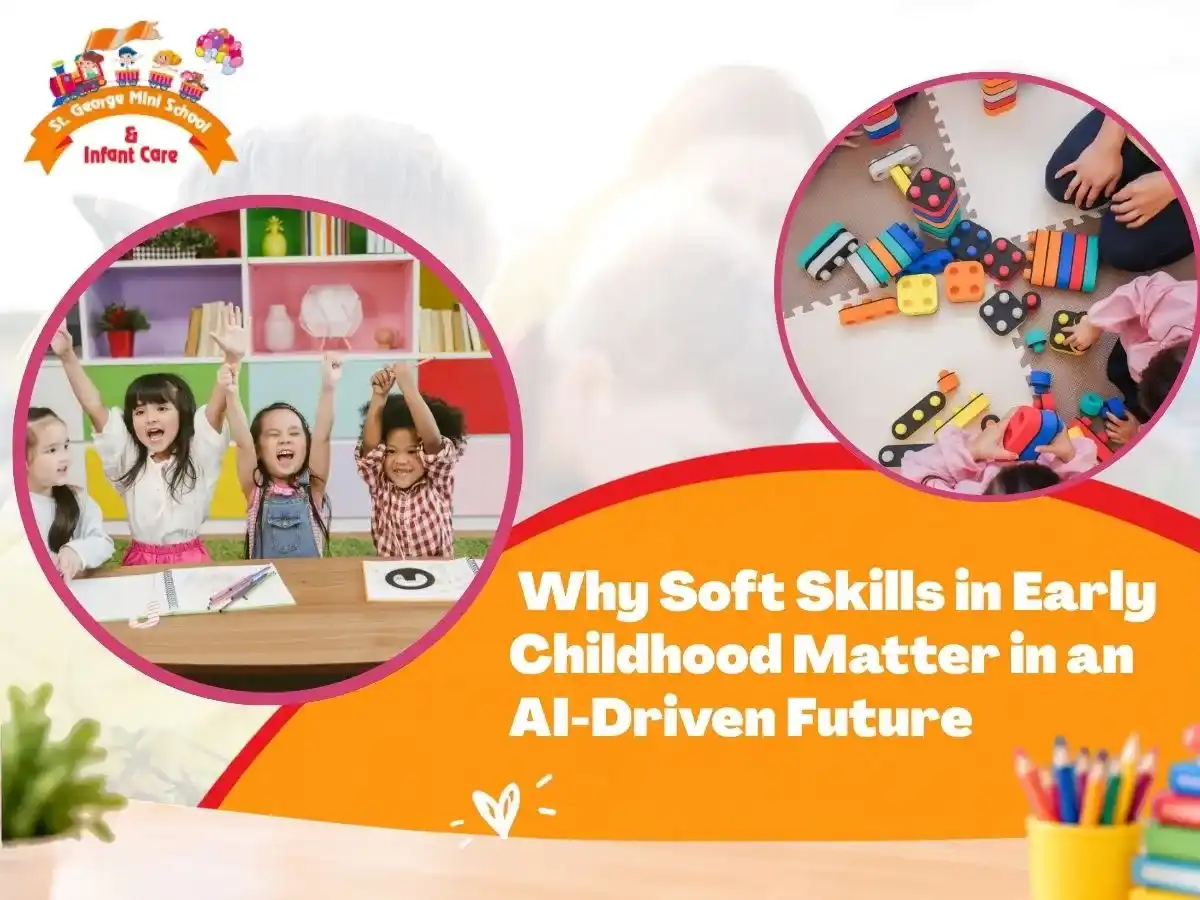
Ask a room of parents what they
want for their four-year-old and you’ll hear “I want them to be happy” far more
often than “I want them to code.” Then comes the worry. If software can write
essays, draw pictures, and answer homework questions in seconds, what’s left
for our kids to be good at? Quite a lot, as it turns out, and most of it is
learned long before anyone sits down at a keyboard. Reading a room, comforting
a friend, and working out a plan with other people all start in early
childhood. We call them soft skills, but they’re anything but soft.
Quick Answer: Why Do Soft Skills Matter So Much Now?
AI is very good at tasks with clear rules and lots of data. It
tends to be weaker where trust, judgment, and human connection come into play.
Children who build communication, empathy, collaboration, creativity,
adaptability, and resilience are likely to be better prepared to work alongside
technology instead of competing with it. Those habits form earliest, through
daily time with caring adults and other children.
Nobody Knows What Work Will Look Like
A child starting daycare this year will enter the workforce in the
2040s. Nobody, including the people building AI tools, knows what jobs will
look like by then. That’s exactly the point. You can’t train a three-year-old
for a specific career, but you can help them become someone who learns quickly,
gets along with others, and handles change without falling apart. Tools will
keep changing. Those traits don’t expire.
Communication Starts Long Before Full Sentences
Toddlers communicate by pointing, grunting, and fierce eye
contact. An educator who crouches down and says, “You want the red truck? Tell
me with words,” is teaching more than vocabulary. She’s showing a child that
their needs matter and that talking gets results. Add songs, stories, and a
daily circle where everyone gets a turn, and children learn to listen as well
as talk. In a world where a screen can answer almost any question, knowing
which question to ask, and hearing what another person is really saying,
becomes the more valuable skill.
Empathy Can’t Be Downloaded
A child notices a friend crying at drop-off and carries over a
stuffed bear. Nobody told them to. A good educator notices too, and says, “That
helped. Look, she’s smiling.” Empathy grows through small moments like that,
where a child sees that what they do changes how someone else feels. A chatbot
can produce caring-sounding words. A child who has actually comforted another
child, and watched it work, understands something deeper.
Collaboration: Building the Tower Together
Group projects are hard for adults. For a three-year-old, sharing
one bucket of blocks is a diplomatic crisis. Taking turns, bargaining over the
big pieces, and compromising when two ideas collide are early lessons in
teamwork, and most real problems at work get solved by groups.
Creativity and Curiosity Keep Kids Asking “What If?”
Give a child a cardboard box and watch it become a boat, a rocket,
a bakery. Open-ended play, with no instruction booklet and no single right
answer, trains the mind to come up with ideas instead of picking from a list.
AI can produce a thousand variations in seconds, but it usually takes a person
to decide what’s worth making and why. Educators protect that curiosity by
saying “What do you think?” more often than “Because I said so.”
Resilience and Adaptability: Handling Wrong Turns
Block towers fall. A friend says “you can’t play.” Rain cancels
the playground. Small setbacks, handled with a calm adult nearby, teach
children that frustration passes and that trying again is always an option.
Over time they build emotional regulation, the ability to feel a big emotion
without being run over by it. Adaptability is the same muscle under another
name: when the plan changes, can you adjust? Kids who practise this young tend
to be more comfortable with uncertainty, and uncertainty is the one thing about
the future we can count on.
How Quality Childcare Builds These Skills
None of this needs a special curriculum. It happens in routines.
Circle time builds listening. Shared play builds empathy and teamwork.
Open-ended materials and outdoor time build creativity. Predictable days with a
little flexibility build self-regulation.
The key ingredient is the adult. Responsive educators who name
feelings, ask open questions, and let children struggle a little before
stepping in turn ordinary days into practice sessions. When you’re comparing
early learning programs, watch how staff talk to children, not just what’s on
the walls. Do they crouch down? Do they ask questions? Do they wait for the
answer? If cost is a factor, ask about subsidized spaces too, but look for the
same things.
What Parents Can Do at Home
Talk at dinner, and ask more than “How was your day?” Try “What
was the funniest thing that happened?” Let your child solve small problems,
like how to split the last cookie, before you step in. Name feelings as they
come up. And let them be bored sometimes, since boredom is often where
imagination starts.
Common Questions Parents Ask
Are soft skills more important than academics?
Not more important, but they work together. Literacy and numeracy
matter, and children with strong social and emotional skills often find it
easier to focus and learn them. The best early learning builds both.
At what age do soft skills start developing?
From infancy. Babies learn trust from responsive caregivers,
toddlers practise sharing and naming feelings, and preschoolers start
negotiating and showing empathy. Every age is a chance.
Final Summary
Technology
will keep changing, and nobody can say precisely which jobs will exist when
today’s toddlers grow up. What we can say is that communication, empathy,
teamwork, creativity, curiosity, and resilience will still matter, and that
they’re built through ordinary days with patient adults and other children. If
you’re looking at options like Daycare North York, look for a place that teaches those skills on
purpose, through play, conversation, and plenty of chances to try, stumble, and
try again.
Featured Blogs
 28/03/22
Which Is The Best Age To Start Chil...
Daycare North York Infant Daycare North York Day Care Center North York Subsidized Daycare North York Daycare Toddlers North York Preschool Programs North York Child Care North York Before and After School Care North York Day Care North York Preschool North York Subsidized Child Care North York Day Care Schools North York


33 Mallard Rd. Centre
- Contact: Sarah Ashfield
- Tel: (647) 478-6114
- E-mail: [email protected]
- 33 Mallard Rd., North York, Ontario M3B 1S4
25 Mallard Rd. Centre
- Contact: Rasha Shamas, RECE
- Tel: (647) 812-7795
- E-mail: [email protected]
- 25 Mallard Rd., North York, Ontario M3B 1S4
141 Bond Ave. Centre
- Contact: Jenna Wright, RECE
- Tel: (647) 478-6043
- E-mail: [email protected]
- 141 Bond Ave., North York, Ontario M3B 1M1
All Rights Reserved © 2026-2027. St. George Mini School & Infant Care.