 Waiting List Registration
 Book A Tour
33 Mallard Rd: (647) 478-6114
141 Bond Ave: (647) 478-6043
25 Mallard Rd: (647) 812-7795
33 Mallard Rd: (647) 478-6114
141 Bond Ave: (647) 478-6043
25 Mallard Rd: (647) 812-7795
2026-07-13
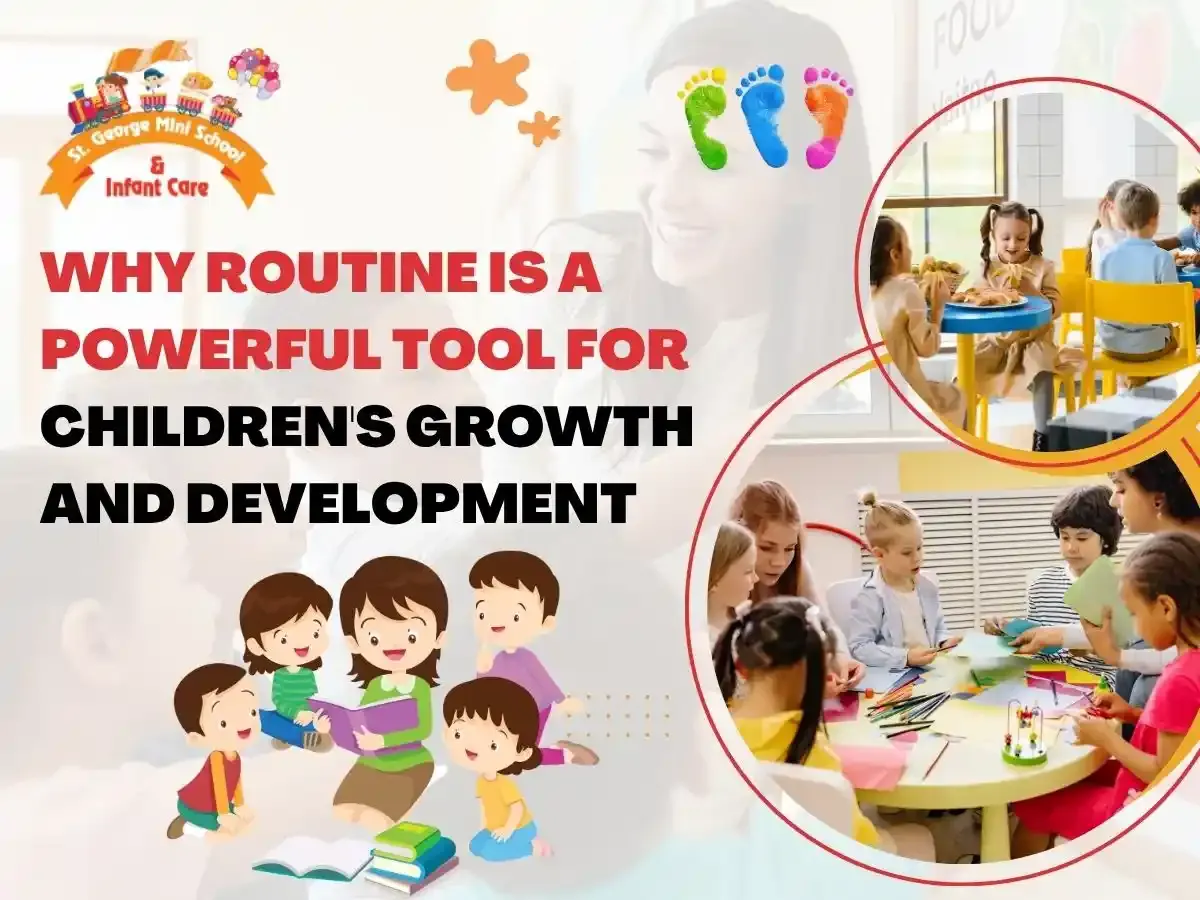
Ask any experienced early
childhood educator what separates a calm, confident classroom from a chaotic
one, and they will often point to one key factor: routine. The predictable
rhythm of a well-run day — knowing what happens next and feeling secure in that
pattern — is one of the quietest yet most powerful tools in a young child's
development.
For parents comparing child
care options, this is worth paying close attention to. A quality daycare isn't
simply a safe place for children to spend the day; it's a structured environment
where consistency itself becomes a teaching tool.
Why Young Children Crave
Predictability
Children under six are still
building the mental tools to manage uncertainty. Young children experience time
differently than adults do — "later" and "in five minutes"
mean very little to a toddler. What does make sense to them is sequence:
breakfast, then circle time, then outdoor play, then lunch. When that sequence
repeats day after day, children begin to feel secure and confident. Instead of
worrying about what comes next, their minds can focus on learning, exploring,
and building relationships.
This is why high-quality child
care programs create consistent daily rhythms rather than relying on
unpredictable schedules. Predictability isn't restrictive — it's liberating. It
frees a young mind from anxiety about the unknown so it can focus on the task
in front of it.
The Developmental Benefits of Routine
Routine touches nearly every
area of a child's growth, often in ways that aren't immediately obvious:
• Emotional
security — Children who know what to expect feel safer, and children
who feel safe are far more willing to take social and creative risks, like
joining a new group or trying an unfamiliar activity.
• Self-regulation —
A consistent schedule of meals, rest, and activity helps regulate mood and
energy, reducing meltdowns that often stem from tiredness or hunger rather than
behavior itself.
• Independence —
A consistent routine helps children understand expectations and complete
everyday tasks with increasing confidence. Children need the security of a
well-planned day so they can confidently explore the world.
• Cognitive
development — Sequencing, memory, and early executive function skills
are all strengthened by following a repeated pattern of steps, which is exactly
why routine-based learning is a common feature of high-quality early education
programs.
A licensed and accredited
child care program builds its approach around this idea: structure isn't the
opposite of joyful learning — it's what makes joyful learning possible.
Routine Doesn't Mean Rigid
It's worth clarifying what
routine actually means in a good early learning setting. It isn't a strict,
unyielding timetable enforced without warmth. At St. George Mini School,
Infant, Toddler, Preschool, and Before/After School Care programs use routine
as scaffolding, not as a cage. The day has a consistent shape: arrival, group
time, learning activities, meals, rest, outdoor play, pickup, but within that
shape is room for spontaneity, creativity, and the individual pace of each
child.
This balance is particularly
important for families who want dependable care without compromising on quality
education, because consistency of care is just as important as affordability. A
program that provides loving structure gives working parents peace of mind that
their child is being educated, not simply watched.
How Routine Supports Working
Families Too
Routine isn't only good for
children — it's good for the households they belong to. At St. George Mini
School, a CWELCC-approved subsidized daycare in North York,
predictable daily rhythms help children and families thrive. Pick-up and
drop-off become smoother transitions for both children and parents. Children
who are already familiar with a predictable daycare routine often find it
easier to adapt to routines at home.
This is one of the quiet,
often overlooked benefits of enrolling in St. George Mini School’s Infant,
Toddler, Preschool, or Before/After School Care programs: the stability doesn't
stay behind at the classroom door. It travels home with the child.
What to Look for in a Quality
Program
When evaluating a day care or
early learning center, a few signs indicate that routine is being used well:
1. A clear and
consistent daily schedule that both staff and children understand and follow.
2. Clear transitions
between activities, rather than abrupt or chaotic shifts.
3. Predictable meal,
rest, and outdoor play times.
4. Flexibility built
into the structure to accommodate individual children's needs, without
abandoning the overall rhythm.
Programs that achieve this
balance often produce calmer, more confident, and more capable young learners.
Conclusion
Routine is more than a
scheduling convenience; it’s one of the best, research-backed tools for
building a child’s emotional security, independence, and cognitive development.
Children need the security of a well-planned day so they can confidently explore
the world.
For families in North York searching for a program that blends dependable routine with genuine warmth and quality care, St. George Mini School provides an environment that values consistency, independence, and child-led learning.
Featured Blogs
 28/03/22
Which Is The Best Age To Start Chil...
Daycare North York Infant Daycare North York Day Care Center North York Subsidized Daycare North York Daycare Toddlers North York Preschool Programs North York Child Care North York Before and After School Care North York Day Care North York Preschool North York Subsidized Child Care North York Day Care Schools North York




33 Mallard Rd. Centre
- Contact: Sarah Ashfield
- Tel: (647) 478-6114
- E-mail: [email protected]
- 33 Mallard Rd., North York, Ontario M3B 1S4
25 Mallard Rd. Centre
- Contact: Rasha Shamas, RECE
- Tel: (647) 812-7795
- E-mail: [email protected]
- 25 Mallard Rd., North York, Ontario M3B 1S4
141 Bond Ave. Centre
- Contact: Jenna Wright, RECE
- Tel: (647) 478-6043
- E-mail: [email protected]
- 141 Bond Ave., North York, Ontario M3B 1M1
All Rights Reserved © 2026-2027. St. George Mini School & Infant Care.