 Waiting List Registration
 Book A Tour
33 Mallard Rd: (647) 478-6114
141 Bond Ave: (647) 478-6043
25 Mallard Rd: (647) 812-7795
33 Mallard Rd: (647) 478-6114
141 Bond Ave: (647) 478-6043
25 Mallard Rd: (647) 812-7795
2026-04-17
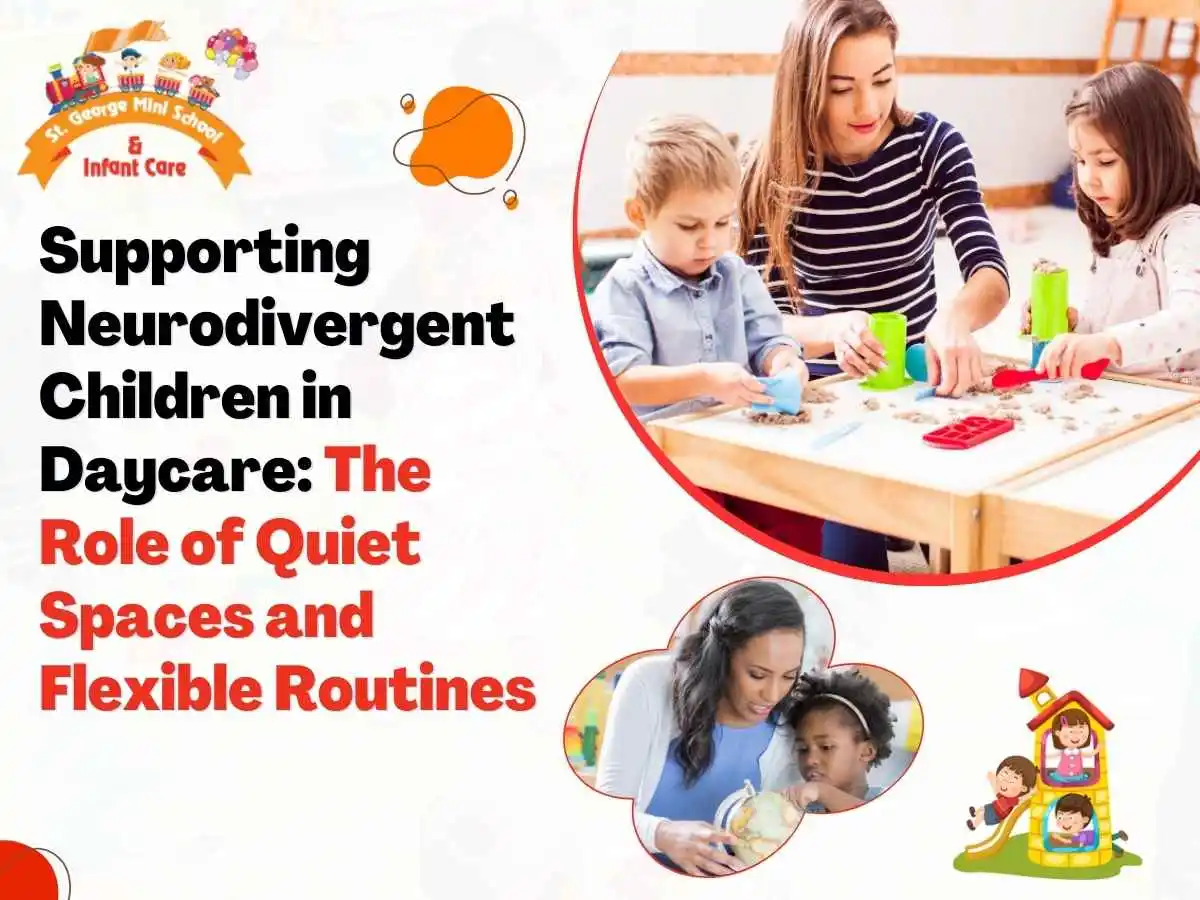
Supporting neurodivergent children in daycare starts with understanding how each child experiences the world. For some children, everyday environments can feel overwhelming due to heightened sensitivity to sound, light, or changes in routine. Social interactions may also take more time as they develop communication skills at their own pace.
In a daycare in North York, creating a supportive and inclusive environment means recognizing these differences and adapting care approaches accordingly. Modern early learning programs focus on inclusive practices, sensory-friendly spaces, and individualized support to help every child feel safe and engaged.
Two key elements that play an important role in this approach are quiet spaces and flexible routines, both of which help children regulate emotions and participate more comfortably in daily activities.
Understanding
Neurodiversity in Early Childhood
Neurodivergent children can be on the autism spectrum, have Attention Deficit Hyperactivity Disorder (ADHD), have sensory processing differences, and/or other developmental disabilities. These children are not "less capable"; they process information, emotion, and environment differently.
In a structured daycare environment, educators work to highlight each child's strengths and provide the tools necessary for the child to navigate their environment successfully. By recognizing early signs of sensory overload, difficulty with transitions, or variations in communication style, caregivers can respond proactively.
Individualized approaches such as early intervention support, sensory strategies, and personalized learning plans are now becoming standard in high-quality child care programs.
Why Quiet Spaces Matter in Daycare
Busy and highly stimulating environments can feel overwhelming for many children. Quiet spaces—often called calm-down corners or sensory areas—provide a peaceful, low-stimulation environment where children can relax and regain a sense of balance.
A well-designed quiet space may include soft seating, gentle lighting, and sensory tools that provide comfort and support. These spaces help children:
• regulate sensory input
• reduce overstimulation
• feel emotionally secure
Quiet spaces are not used as punishment. Instead, they empower children to recognize when they need a break and support the development of self-regulation skills.
The Importance of
Flexible Routines
The ability to maintain structure is essential, but children with diverse learning needs may find an overly rigid routine very hard to cope with. Unexpected transitions or overly rigid schedules can lead to increased anxiety levels or emotional overwhelm for these children.
By offering flexible routines in a daycare setting, caregivers can tailor care to each child's needs while maintaining consistency. Some ways to offer this flexibility are:
• Provide additional time for transitioning between different activities.
• Provide the children with choices to increase their overall feeling of control.
• Adjusting the expected participation level based on each child's comfort level.
This type of flexible framework allows for predictable, adaptable routines that support both stability and flexibility, which are important for children's development.
Supporting Sensory
Regulation and Emotional Well-Being
Supporting the sensory needs of neurodivergent children is essential for their comfort and well-being. Some may want to move or touch things, while some require calmer, less stimulating environments.
In inclusive early learning environments, educators use strategies such as:
• Using sensory tools (e.g., fidget toys, etc.)
• Offering movement breaks to relieve energy
• Instructing the child on calm breathing or relaxation methods
• Providing picture schedules to manage uncertainty.
These strategies help children manage their surroundings and express their feelings, so they feel comfortable in an inclusive child care setting and can engage in activities.
Encouraging
Communication and Social Inclusion
Children who are neurodiverse may express themselves differently from their peers. To foster all forms of expression, caregivers should create an environment that welcomes and supports every type.
In progressive daycares and preschools, teachers:
• Use visuals and/or simplified vocabulary to enhance comprehension
• Facilitate peer interaction through structured free-play
• Honour each child's unique method of expression
• Encourage inclusion while allowing for self-determination
These strategies help children build confidence and develop social skills at their own pace.
The Role of Educators
in Inclusive Child Care
Educators play a critical role in creating inclusive environments. Educators who can recognize children’s emotional cues and respond appropriately play a key role in shaping positive daycare experiences. When a daycare has good quality care, staff members will be trained in:
• Recognizing signs of sensory overload
• Giving children help and support at the right time
• Changing how they teach to match how children learn
• Developing a classroom environment that is safe and welcoming
By taking the time to make sure each child feels valued and understood, staff members help create a positive experience for all children.
Partnering With
Parents for Consistency
It is very important to have a consistent home and daycare environment for a neurodivergent child. When parents and providers communicate about how to meet their neurodivergent child's needs, they provide consistent information that supports the child's growth and development.
By communicating with each other, parents and providers can reinforce their neurodivergent child's sense of safety and stability by ensuring that calm-down techniques, sensory supports, and routines are consistent across the daycare and home environments.
Summary
Supporting neurodivergent children in daycare requires understanding, flexibility, and a caring environment. Quiet spaces and adaptable routines help children feel safe, manage their emotions, and participate more comfortably in daily activities.
In a well-designed Day Care North York program, creating a supportive and inclusive space allows every child—from infants to preschoolers—to grow, learn, and feel confident in their early development journey.
Featured Blogs
 28/03/22
Which Is The Best Age To Start Chil...
Daycare North York Infant Daycare North York Day Care Center North York Subsidized Daycare North York Daycare Toddlers North York Preschool Programs North York Child Care North York Before and After School Care North York Day Care North York Preschool North York Subsidized Child Care North York Day Care Schools North York





33 Mallard Rd. Centre
- Contact: Sarah Ashfield
- Tel: (647) 478-6114
- E-mail: [email protected]
- 33 Mallard Rd., North York, Ontario M3B 1S4
25 Mallard Rd. Centre
- Contact: Rasha Shamas, RECE
- Tel: (647) 812-7795
- E-mail: [email protected]
- 25 Mallard Rd., North York, Ontario M3B 1S4
141 Bond Ave. Centre
- Contact: Jenna Wright, RECE
- Tel: (647) 478-6043
- E-mail: [email protected]
- 141 Bond Ave., North York, Ontario M3B 1M1
All Rights Reserved © 2026-2027. St. George Mini School & Infant Care.