 Waiting List Registration
 Book A Tour
33 Mallard Rd: (647) 478-6114
141 Bond Ave: (647) 478-6043
25 Mallard Rd: (647) 812-7795
33 Mallard Rd: (647) 478-6114
141 Bond Ave: (647) 478-6043
25 Mallard Rd: (647) 812-7795
2026-02-10
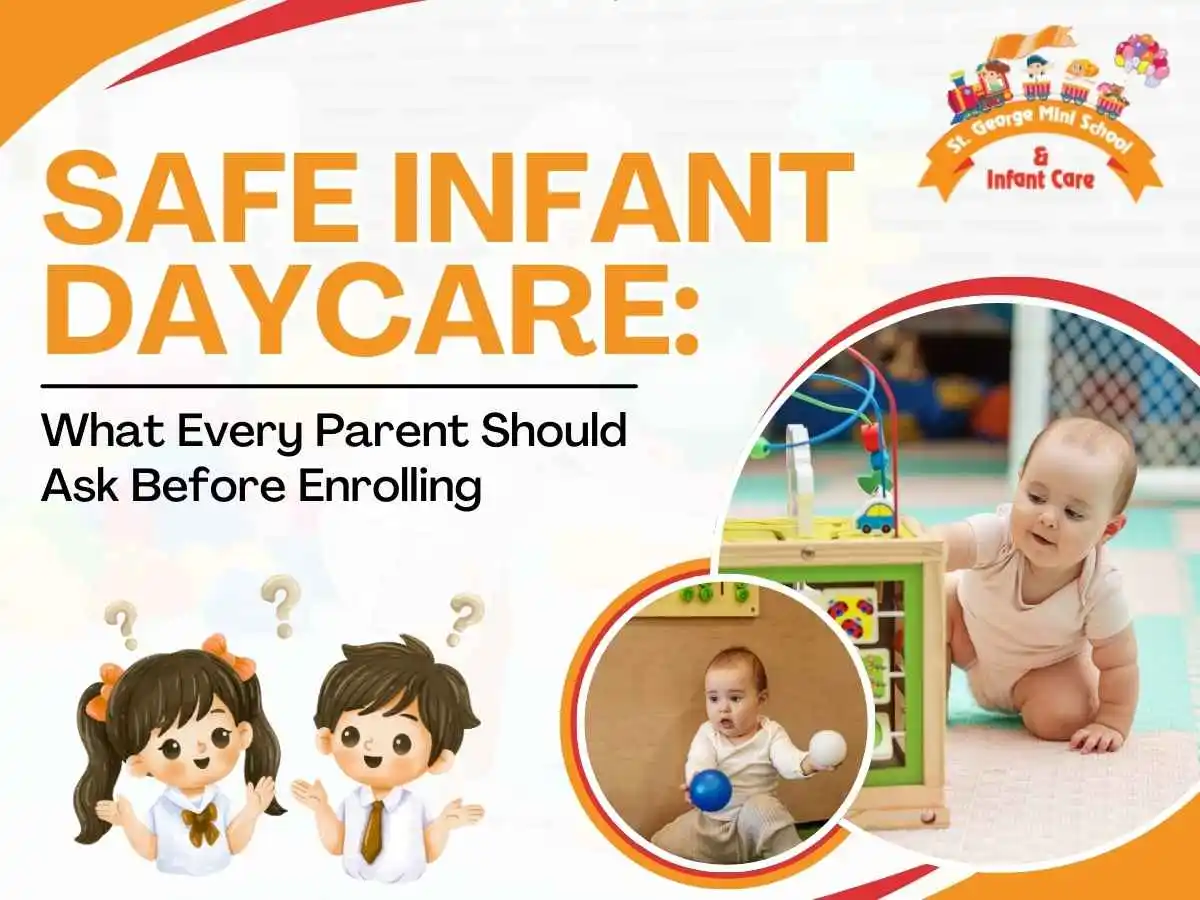
Choosing an infant daycare is not just about finding a place with
availability—it's about trusting someone else with your baby's safety, comfort,
and early development. For many parents, this decision comes with a mix of
excitement and anxiety. You want to know that your child will be cared for with
patience, warmth, and attention, not just supervised.
It’s about building strong and trusting relationships with
families.
Before enrolling, asking the right questions can help you look
beyond appearances and truly understand how a daycare operates. Whether you
plan to enroll your child in preschool or future before- and after-school care,
a strong and safe infant foundation is essential.
Caregiver Experience
Makes All the Difference
The experience and education of caregivers are major factors in
the safety of daycares for infants. Infants cannot verbally express their needs
or emotions, so caregivers need to be able to read very subtle signals to
determine whether they are hungry, tired, uncomfortable, or overstimulated.
Parents should ask caregivers how they have been trained in infant
care, specifically in safe sleeping practices, emergency response, and
emotionally comforting methods. Daycares that also offer preschool programs
often invest strongly in training qualified early childhood educators.
When a caregiver knows your child well, small challenges are less
likely to become stressful experiences.
Why Infant-to-Caregiver
Ratios Matter
Safety in infant daycare depends not only on policies but also on
attentive and active caregivers. When caregivers are responsible for too many
infants at once, response times suffer, and babies may not receive the
individual attention they need.
Low infant-to-caregiver ratios allow caregivers to stay alert, respond
quickly, and build meaningful connections with each child. Parents should ask
whether these ratios are consistently maintained throughout the day, including
during naps, outdoor time, and staff breaks.
Many well-established preschool programs maintain strict ratio
standards from infancy onward because they recognize how critical early
attention is for emotional security and safety.
Safe Sleep Practices
Are Non-Negotiable
Sleep is a vulnerable time for infants, making safe sleep policies
among the most important topics parents should discuss. A safe daycare will
have clear routines that prioritize both comfort and safety during naps.
Ask how infants are placed to sleep, how cribs are arranged, and
whether sleep is monitored at all times. Caregivers should follow recommended
safe sleep guidelines and never rely on unsafe positioning or loose bedding.
Programs that continue into preschool often treat sleep routines
as an important part of a child's overall development.
Cleanliness and Health
Standards Protect Your Baby
Babies' immune systems aren't yet fully developed; therefore,
cleanliness and hygiene are key factors in creating a safe daycare environment.
There must be established protocols for sanitizing toys, diapering children,
and managing sick children.
Parents should not hesitate to ask about cleaning frequency,
caregiver handwashing procedures between tasks, and how the centre handles sick
children. Good health policies not only protect your child but also demonstrate
that the centre is acting proactively rather than reactively. This level of
care supports children as they grow and transition into more structured
preschool environments.
Communication Builds
Trust and Peace of Mind
Infant daycare is about more than supervision—it's about building
strong and trusting relationships with families. Clear, continuous
communication reassures parents by providing regular updates on their child's
feeding, sleep, mood, and developmental milestones.
Providing this type of information also prepares families for
future transitions, such as moving from an infant daycare to a before- or
after-school program, where strong communication with parents and caregivers
will be necessary. When caregivers foster open communication with families, it
builds confidence and trust, both of which are very important to every parent.
Emergency Preparedness
Shows Professionalism
Even though emergencies are uncommon, daycare centres must be
fully prepared. Ask your daycare how they handle unexpected situations, from
medical emergencies to evacuation procedures.
Programs with good management have formalized Emergency Plans in
place, fully trained personnel, and established communication processes with
parents. Responding to emergencies in this way reflects the centre's commitment
to professionalism and safety at every level.
The Environment Should
Feel Calm and Purposeful
Lastly, have a look at the infant space. A safe environment should
not feel overstimulating or chaotic, but rather should be designed specifically
to accommodate babies.
Find safe systems of entry, age-appropriate devices, and alert,
active caregivers. Programs that support children from infancy through
preschool are more likely to create environments that evolve with a child's
developmental needs.
Summary
Choosing a
safe infant daycare requires thoughtful questions and careful observation. From
caregiver training and communication to sleep practices and hygiene standards,
every detail matters for your baby's well-being. Asking the right questions
early helps parents feel more confident, informed, and secure in their
decision, especially when planning long-term options like Before and After
School Care North York.
Featured Blogs
 28/03/22
Which Is The Best Age To Start Chil...
Daycare North York Infant Daycare North York Day Care Center North York Subsidized Daycare North York Daycare Toddlers North York Preschool Programs North York Child Care North York Before and After School Care North York Day Care North York Preschool North York Subsidized Child Care North York Day Care Schools North York




33 Mallard Rd. Centre
- Contact: Sarah Ashfield
- Tel: (647) 478-6114
- E-mail: [email protected]
- 33 Mallard Rd., North York, Ontario M3B 1S4
25 Mallard Rd. Centre
- Contact: Rasha Shamas, RECE
- Tel: (647) 812-7795
- E-mail: [email protected]
- 25 Mallard Rd., North York, Ontario M3B 1S4
141 Bond Ave. Centre
- Contact: Jenna Wright, RECE
- Tel: (647) 478-6043
- E-mail: [email protected]
- 141 Bond Ave., North York, Ontario M3B 1M1
All Rights Reserved © 2026-2027. St. George Mini School & Infant Care.