 Waiting List Registration
 Book A Tour
33 Mallard Rd: (647) 478-6114
141 Bond Ave: (647) 478-6043
25 Mallard Rd: (647) 812-7795
33 Mallard Rd: (647) 478-6114
141 Bond Ave: (647) 478-6043
25 Mallard Rd: (647) 812-7795
2026-02-11
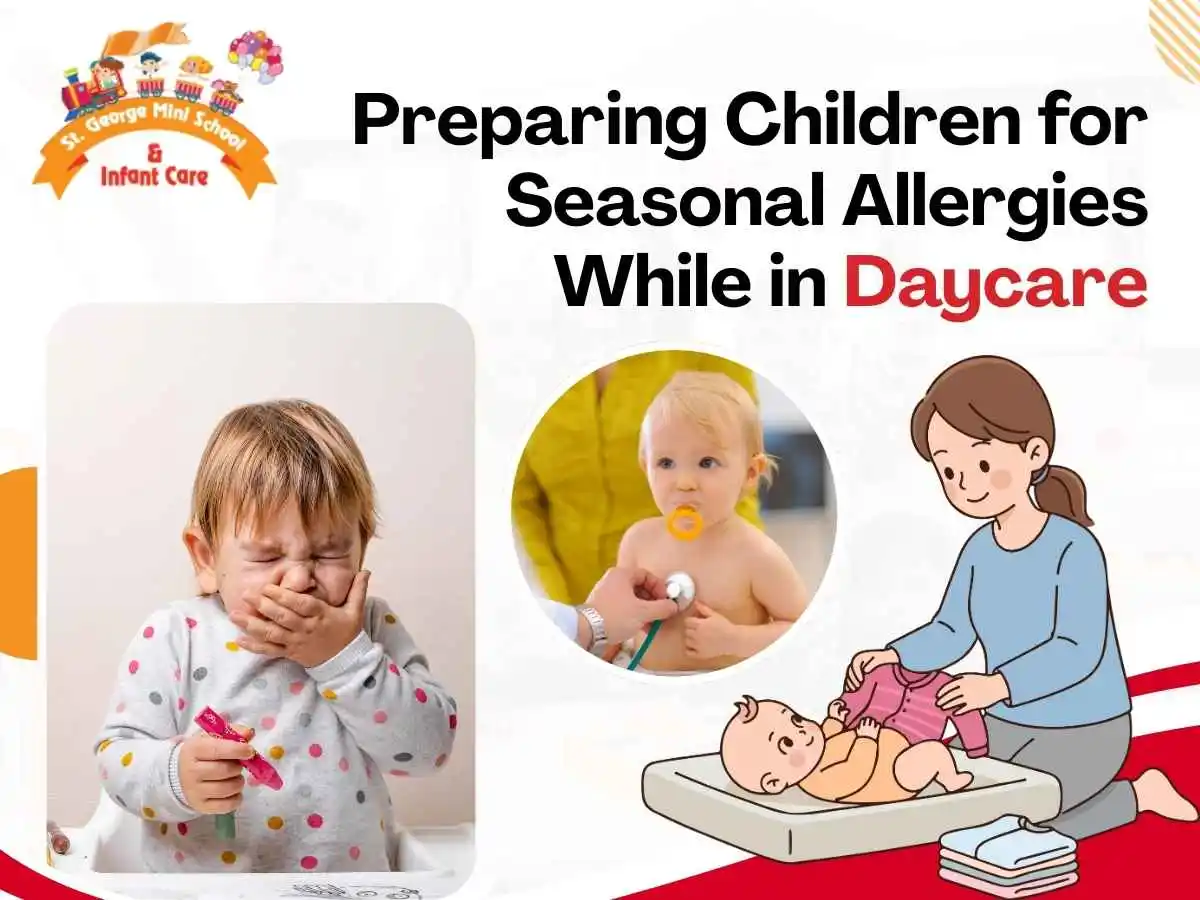
Seasonal allergies can be difficult for young children, particularly if
they spend a lot of their day in a daycare centre. With symptoms ranging from a
runny nose and watery eyes to sneezing and fatigue, seasonal allergies can
affect a child's comfort, mood, and ability to participate in activities. For
parents and caregivers, preparation is essential in keeping children healthy
and happy during allergy season.
A well-run preschool or nursery plays an important role in supporting
children with seasonal sensitivities by creating awareness, maintaining a
healthy environment, and responding thoughtfully to individual needs.
Understanding Seasonal Allergies
in Young Children
Seasonal allergies in children are usually caused by pollen, dust,
mould, or environmental changes, such as in spring and fall. Although
discomfort is common, young children may not be able to express it, so it is
important to ensure caregivers can recognize signs of discomfort early.
Early signs observed in a day care setting may include frequent sneezing
during outdoor play or increased congestion after certain activities.
Caregivers can observe early signs of discomfort and inform parents so that
appropriate steps can be taken.
The Role of Daycare in Managing
Allergy Triggers
Children are naturally energetic and curious, which means they may
occasionally be exposed to allergens. Nonetheless, quality daycare settings
make efforts to minimize unnecessary triggers.
These can include keeping indoor areas clean, frequently sanitizing
surfaces and toys, and keeping rooms well-ventilated and using proper
filtration where possible. Many child care providers also adjust outdoor play
during high-pollen seasons, balancing fresh air, comfort, and children's
health.
These preventative practices help children participate fully in the day
without ongoing discomfort.
Communication Between Parents and
Caregivers Is Essential
One of the most effective ways to prepare children for seasonal
allergies is open communication. Parents should share any known allergy
concerns, typical symptoms, and recommended responses with their daycare
provider.
When caregivers understand a child's specific needs, they can:
• Watch for early allergy
symptoms
• Provide timely comfort and
reassurance
• Follow agreed-upon care
routines
• Communicate changes or concerns
promptly
Strong communication builds trust and ensures consistent care between
the home and the day care setting.
Supporting Children Emotionally
During Allergy Season
Seasonal allergies not only affect physical health but can also impact a
child's mood and energy levels. A child who feels fatigued or uncomfortable may
become more irritable or withdrawn.
Caregivers are patient and flexible in a supportive child care setting,
offering children opportunities to rest or engage in quieter activities. This
emotional support makes children feel understood and safe, even on their bad
days.
Teaching Simple Allergy Awareness
to Children
Even at a young age, children can begin learning simple habits that
support their well-being. Caregivers in daycare settings often encourage
age-appropriate practices such as:
• Washing hands after outdoor
play
• Avoid rubbing their eyes or
nose
• Drinking water regularly
These gentle habits foster early health awareness and empower children
to take small steps to care for their own bodies.
Creating a Health-Focused Daycare
Environment
Taking a proactive approach to seasonal allergies reflects a strong
commitment to children's health. Good day care centres are always clean and
well-ventilated, and staff monitor children daily for signs of discomfort or
illness to ensure a safe and friendly environment for all children.
With cooperation between caregivers, parents, and children, allergy
season can be managed more easily, supporting both learning and play.
Summary
Preparing children for seasonal allergies while in daycare requires
awareness, communication, and thoughtful care. With clean environments,
responsive caregivers, and supportive routines, children can remain comfortable
and engaged throughout allergy season. Families benefit most when daycare and
home work together to support children's health, particularly in communities
with changing seasonal conditions like North York. Choosing a trusted Daycare
in North York ensures children receive attentive care, a healthy
environment, and the support they need to stay active and comfortable during
allergy season.
Featured Blogs
 28/03/22
Which Is The Best Age To Start Chil...
Daycare North York Infant Daycare North York Day Care Center North York Subsidized Daycare North York Daycare Toddlers North York Preschool Programs North York Child Care North York Before and After School Care North York Day Care North York Preschool North York Subsidized Child Care North York Day Care Schools North York





33 Mallard Rd. Centre
- Contact: Sarah Ashfield
- Tel: (647) 478-6114
- E-mail: [email protected]
- 33 Mallard Rd., North York, Ontario M3B 1S4
25 Mallard Rd. Centre
- Contact: Rasha Shamas, RECE
- Tel: (647) 812-7795
- E-mail: [email protected]
- 25 Mallard Rd., North York, Ontario M3B 1S4
141 Bond Ave. Centre
- Contact: Jenna Wright, RECE
- Tel: (647) 478-6043
- E-mail: [email protected]
- 141 Bond Ave., North York, Ontario M3B 1M1
All Rights Reserved © 2026-2027. St. George Mini School & Infant Care.