 Waiting List Registration
 Book A Tour
33 Mallard Rd: (647) 478-6114
141 Bond Ave: (647) 478-6043
25 Mallard Rd: (647) 812-7795
33 Mallard Rd: (647) 478-6114
141 Bond Ave: (647) 478-6043
25 Mallard Rd: (647) 812-7795
2026-06-10
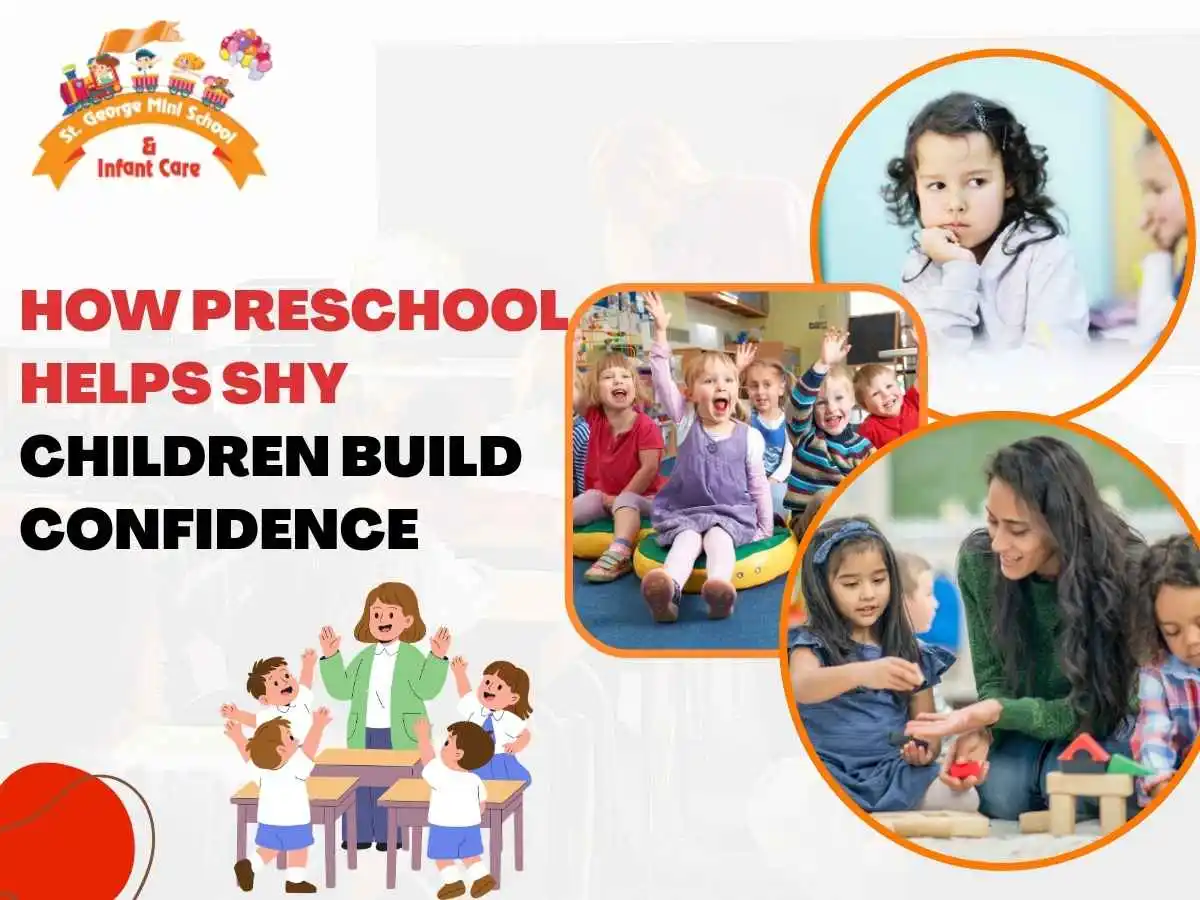
Some kids just walk into a room as if they
own it. They'll introduce themselves to strangers, jump right into group
activities, and seem completely comfortable in new social situations.
Then there are the others — the ones who press close to their
parent's leg at drop-off, who watch from the edges before joining, who take a
little longer to warm up but, once they do, reveal a depth and warmth that
takes your breath away.
Shyness is not a flaw. It is not something to fix. But it can,
without the right environment and support, quietly limit a child — keeping them
on the outside of friendships, holding them back from experiences they actually
want, and building a story in their mind that they are somehow less capable
than the children around them.
The right preschool changes that story. Gently, consistently, and
without ever forcing a child to be someone they're not.
Understanding Shyness
in Early Childhood
Shyness in young children is far more common than most parents
realize. Research suggests that somewhere between 15 and 20 % of children are
born with a temperament that makes them more cautious and reserved in new
social situations — what developmental psychologist Jerome Kagan called
behavioural inhibition.
These children are not anxious by accident. Their nervous systems
are simply more sensitive to novelty and social uncertainty. They process new
environments more deeply before engaging. They observe before they act. In many
ways, these are remarkable qualities — thoughtfulness, perceptiveness,
emotional depth — that simply need the right conditions to become strengths
rather than barriers.
Preschool, when designed well, provides exactly those conditions.
Why Preschool Is
Particularly Powerful for Shy Children
Home is safe for shy children. It is familiar, predictable, and
populated by people who already know and love them. The challenge is that home
alone cannot give a child what they eventually need: the lived experience of
being safe in the world beyond it.
A quality preschool offers something home cannot — a structured,
warm, low-stakes environment where a child can practice being around others, at
their own pace, with the consistent support of skilled educators who understand
temperament and development.
This matters enormously because confidence, for a shy child, is
not built through grand gestures or forced participation. It is made of lots of
little social successes, over days, weeks, and months, that build up and create
a new picture of yourself.
I can do this. I belong here. People like me.
That internal shift is what quality preschool programs are quietly
building, one gentle morning at a time.
What Good Preschool
Programs Actually Do for Shy Children
Not every preschool handles shyness well. Some programs
inadvertently make it worse — putting children on the spot, requiring
whole-group participation before readiness is established, or treating
quietness as a problem to be corrected.
The best preschool programs do something different.
They create predictable
environments: Shy children
thrive on routine. Knowing what comes next — the arrival ritual, the activity
sequence, the goodbye song — dramatically reduces the social anxiety that
unpredictability triggers. A well-structured preschool day is one of the most
powerful tools available for a reserved child.
They use small groups
intentionally: Whole-class
settings can feel overwhelming for a shy child. Quality programs break into
small groups frequently — two or three children working on something together —
which creates manageable social situations where a quieter child can
participate without being swallowed by the noise of the larger group.
They never force
participation: The instinct to
draw a shy child out by putting them on the spot almost always backfires.
Skilled early childhood educators know to offer, invite, and wait — making
space for a child to step in when they're ready, and ensuring that when they
do, the experience is positive enough to want to repeat.
They celebrate small
braveries: The child who
finally spoke up at circle time. The one who asked a peer to play for the first
time. These are enormous moments for a shy child, and great educators mark them
— quietly, sincerely, and specifically — in ways that build genuine pride.
They build bridges to
peer connection: Sometimes a shy
child just needs one friendship — one reliable, comfortable peer relationship —
to unlock their social world. Skilled preschool educators intentionally create
opportunities for children to connect with one another. They put children together
whosse personalities seem to fit and create chances for them to share
activities. This helps kids build their first friendships.
The Role of Before and
After School Care in Building Ongoing Confidence
While preschool helps build confidence, many children continue to
benefit from support as they transition into primary school. Quality before and
after school care is crucial in those years, playing a vital but often
underestimated role.
The hours before and after the school day are less structured, more
social, and require children to navigate peer relationships without the
scaffolding of a formal classroom. For a previously shy child, this environment
— when well-supported by attentive educators — is where the confidence built in
preschool gets tested, reinforced, and deepened.
Before and after school care educators who know each child
individually, who notice when someone is withdrawing staff that, and who gently
encourage social risk-taking creates a continuity of support that makes all the
difference. It's not just care. It's the ongoing, quiet work of helping a child
believe in themselves.
Shyness Is the
Beginning — Not the Limit
The shy child who clings at drop-off in September is often the
same child who runs in confidently by December — not because their personality
changed, but because the environment met them with enough patience, warmth, and
consistency to let their natural confidence emerge.
This is one of the most quietly extraordinary things that great
preschool programs do. They don't change who a child is. They create the
conditions for a child to discover who they're capable of becoming.
And that discovery, once made, belongs to them forever.
About St. George Mini
School
St. George Mini School is a licensed child care provider in North
York, offering thoughtfully designed preschool programs and Before
and After School Care North York for children from infancy through
the primary years. Our caring educators nurture every child’s confidence,
curiosity, and passion for learning — all within an environment where every
child feels noticed, appreciated, and truly supported.
St. George Mini School — where every child finds their confidence,
in their own time.
Featured Blogs
 28/03/22
Which Is The Best Age To Start Chil...
Daycare North York Infant Daycare North York Day Care Center North York Subsidized Daycare North York Daycare Toddlers North York Preschool Programs North York Child Care North York Before and After School Care North York Day Care North York Preschool North York Subsidized Child Care North York Day Care Schools North York



33 Mallard Rd. Centre
- Contact: Sarah Ashfield
- Tel: (647) 478-6114
- E-mail: [email protected]
- 33 Mallard Rd., North York, Ontario M3B 1S4
25 Mallard Rd. Centre
- Contact: Rasha Shamas, RECE
- Tel: (647) 812-7795
- E-mail: [email protected]
- 25 Mallard Rd., North York, Ontario M3B 1S4
141 Bond Ave. Centre
- Contact: Jenna Wright, RECE
- Tel: (647) 478-6043
- E-mail: [email protected]
- 141 Bond Ave., North York, Ontario M3B 1M1
All Rights Reserved © 2026-2027. St. George Mini School & Infant Care.