 Waiting List Registration
 Book A Tour
33 Mallard Rd: (647) 478-6114
141 Bond Ave: (647) 478-6043
25 Mallard Rd: (647) 812-7795
33 Mallard Rd: (647) 478-6114
141 Bond Ave: (647) 478-6043
25 Mallard Rd: (647) 812-7795
2026-07-21
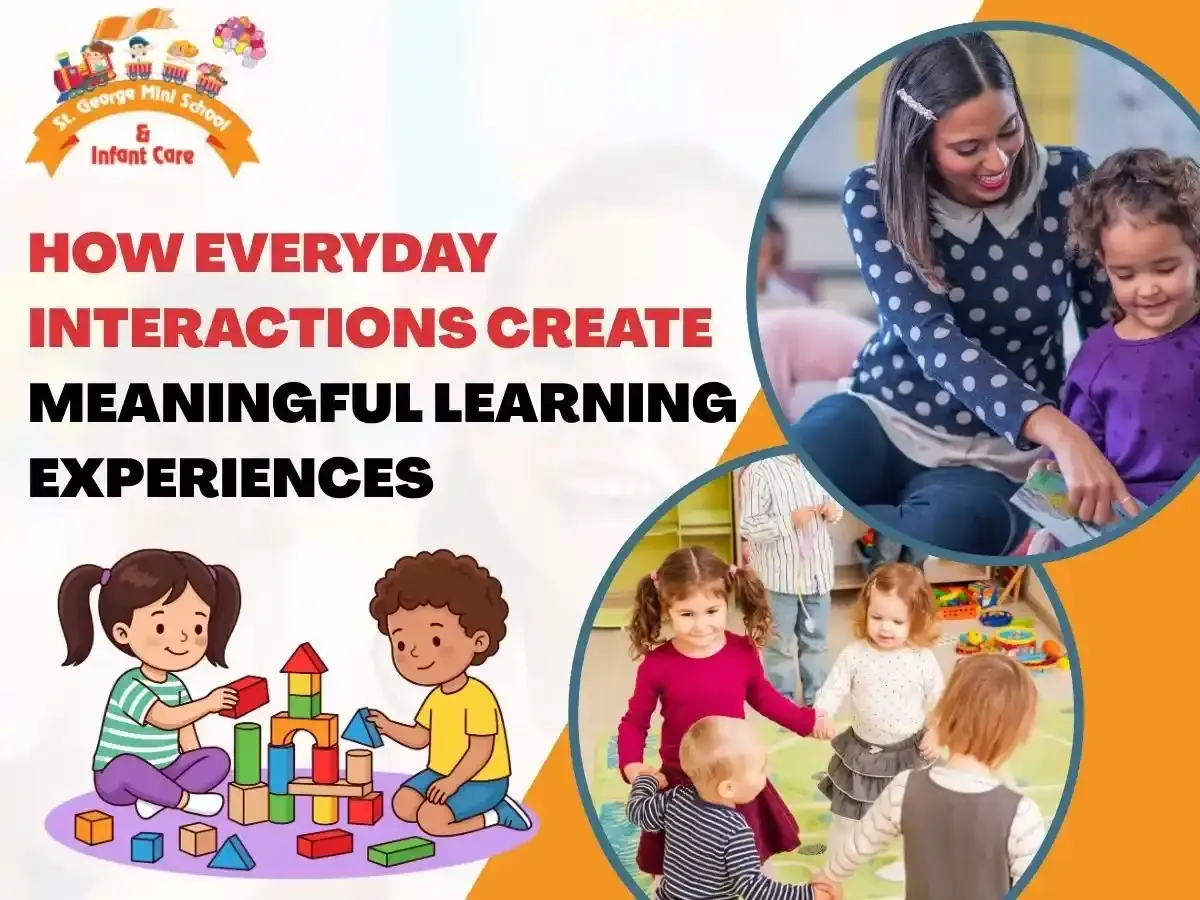
A toddler points at a bird. An adult looks up, says
"Yes, that's a bird — it's flying!" and the toddler points again,
delighted that someone noticed. That tiny, ten-second exchange is not a
throwaway moment. Developmental scientists call this pattern "serve and
return" — a child initiates a bid for attention, and an adult responds —
and it is now understood to be one of the single most important mechanisms
through which young brains build language, trust, and reasoning skills.
This matters directly for how parents should think
about early child care. The value of a strong program isn't measured only by
its lesson plans. It's measured by how many of these small, responsive
exchanges happen throughout an ordinary day.
The Science Behind "Serve and Return"
Research from child development centers, including
work popularized by Harvard's Center on the Developing Child, has shown that
brain architecture in the first few years of life is shaped less by planned
lessons and more by the quality and frequency of back-and-forth exchanges
between a child and the adults around them. Each time a child
"serves" — through a babble, a question, a gesture, or a cry — and an
adult "returns" that signal with attention and a relevant response, a
small neural connection strengthens.
This is fundamentally different from passive
exposure. A child who hears language in the background does not build the same
cognitive skills as a child whose comments are noticed and responded to
directly. It is the responsiveness, not the volume of words, that drives
development. This insight reshapes what parents should look for in a day care
center: not just activities, but adults who are genuinely tuned in to each
child's cues throughout the day.
Where These Interactions Actually Happen
The most meaningful learning exchanges rarely occur
during formal "lesson time." They happen in the in-between moments
that a rushed or understaffed environment tends to skip past entirely:
During meals —
A caregiver asking a child to describe the color or texture of their food turns
a routine snack into a language-building conversation.
During transitions — Walking from the play area to the reading
corner is an opportunity for a caregiver to narrate what's happening, count
steps, or ask a question, turning "dead time" into learning time.
During conflict —
When two children disagree over a toy, an adult who steps in not just to
resolve it but to talk through why it happened is teaching empathy and
negotiation in real time.
During play —
A child building a tower who looks up for reaction is issuing a serve. An adult
who notices, comments, and asks a follow-up question is returning it — and
reinforcing the child's instinct to seek connection and share discovery.
This is precisely why staff-to-child ratios and
genuine caregiver attentiveness matter so much when evaluating any
daycare setting. A program can have excellent facilities and still fall short if
staff don't have the bandwidth to notice and respond to these small daily cues.
Peer Interaction Matters Just as Much
Adults aren't the only ones who contribute to these
meaningful interactions. Children learn an enormous amount from each other —
negotiating turns, mimicking language, resolving small disputes, and
celebrating each other's discoveries. A well-designed day care environment
intentionally builds in unstructured social time precisely because peer-to-peer
interaction develops skills that adult-led instruction cannot fully replicate,
including reading social cues, managing frustration, and practicing patience.
Why This Should Influence How Parents Choose a
Program
Given how much of early development rests on
responsive interaction, parents evaluating programs — including those relying
on subsidized child care — should ask less about curriculum binders and more
about the culture of attentiveness in the room. A few practical questions can
reveal a lot:
1. Do staff get down to a child's eye level
when speaking with them?
2. Are children's questions and observations
acknowledged, even during busy moments like mealtime or cleanup?
3. Is there enough staff presence to allow
genuine one-on-one moments throughout the day, not just during scheduled
activities?
4. Do educators narrate everyday actions
("We're washing our hands now because...") rather than working in
silence?
Programs where the answer is consistently yes tend
to produce children with stronger vocabularies, greater emotional security, and
a more natural curiosity about the world around them.
In Summary
Meaningful learning rarely announces itself with a
worksheet or a formal lesson. It happens in the quiet, repeated moments of
genuine back-and-forth between a child and the people around them — a comment
noticed, a question answered, a small discovery shared. This is the invisible
architecture behind real cognitive and emotional growth in the earliest years.
Families searching for Child Care in North York that takes these everyday interactions seriously should look for a program built around attentive, responsive caregiving, not just a busy schedule.
Featured Blogs
 28/03/22
Which Is The Best Age To Start Chil...
Daycare North York Infant Daycare North York Day Care Center North York Subsidized Daycare North York Daycare Toddlers North York Preschool Programs North York Child Care North York Before and After School Care North York Day Care North York Preschool North York Subsidized Child Care North York Day Care Schools North York




33 Mallard Rd. Centre
- Contact: Sarah Ashfield
- Tel: (647) 478-6114
- E-mail: [email protected]
- 33 Mallard Rd., North York, Ontario M3B 1S4
25 Mallard Rd. Centre
- Contact: Rasha Shamas, RECE
- Tel: (647) 812-7795
- E-mail: [email protected]
- 25 Mallard Rd., North York, Ontario M3B 1S4
141 Bond Ave. Centre
- Contact: Jenna Wright, RECE
- Tel: (647) 478-6043
- E-mail: [email protected]
- 141 Bond Ave., North York, Ontario M3B 1M1
All Rights Reserved © 2026-2027. St. George Mini School & Infant Care.