 Waiting List Registration
 Book A Tour
33 Mallard Rd: (647) 478-6114
141 Bond Ave: (647) 478-6043
25 Mallard Rd: (647) 812-7795
33 Mallard Rd: (647) 478-6114
141 Bond Ave: (647) 478-6043
25 Mallard Rd: (647) 812-7795
2026-01-23
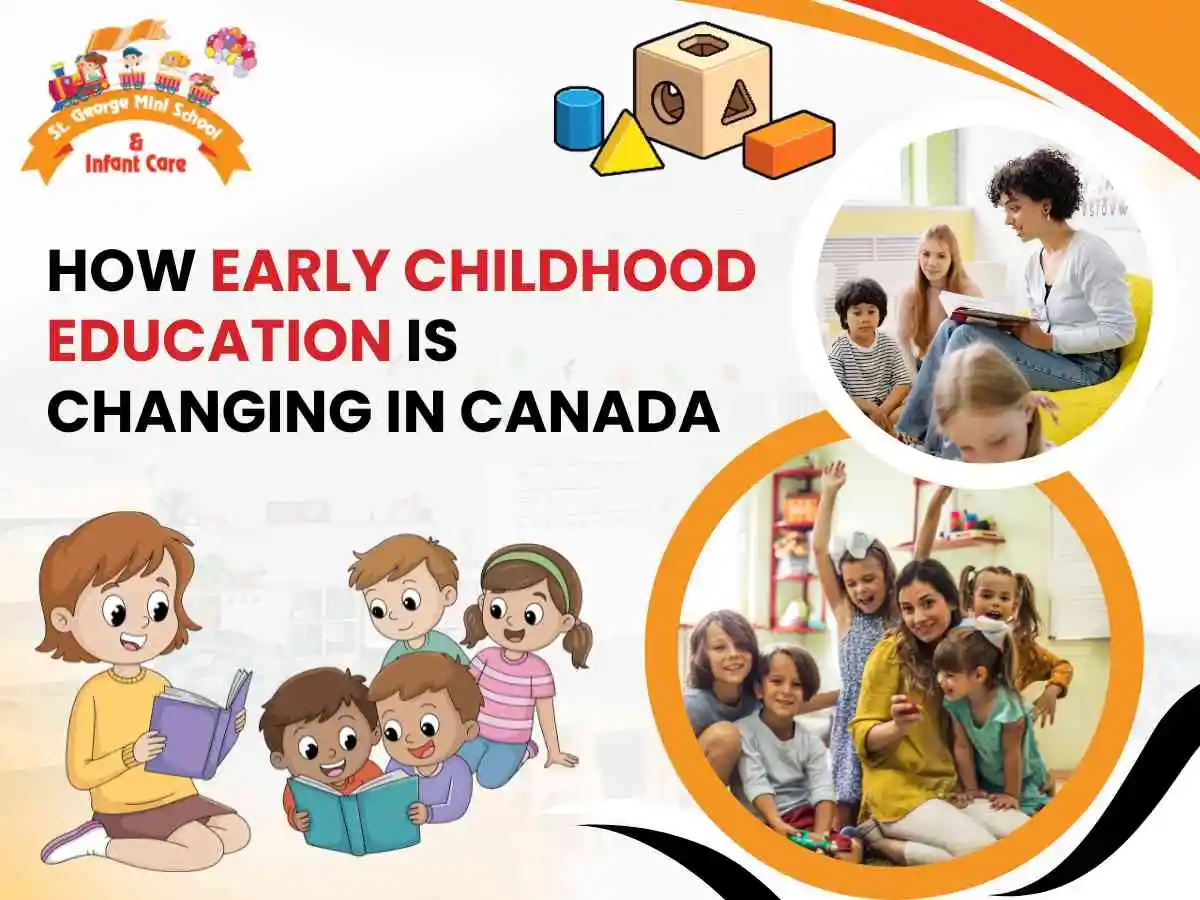
Early childhood education in Canada is undergoing a
meaningful transformation. As research, policies, and family needs evolve, the
way early childhood education is delivered is also changing. Modern child care
facilities are no longer restricted to mere child supervision; they are
evolving into learning Center that promote child development from day one.
These shifts are influencing day care Centers, day
care schools, educator training programs, and the overall family experience in
early childhood education.
A Shift From Care to Early Learning
Traditionally, day care facilities were viewed
mainly as places where children stayed while their parents worked. Although
security and supervision remain relevant in this area, contemporary child
education emphasizes equal attention to cognitive development and
socialization.
In Canadian daycare centers, many have adopted
curriculum guidelines for early learning skills such as reading, writing,
communication, and problem-solving. All these activities are conducted through
play. The approach has been influenced by the recognition of the vital role of
the early years in laying the foundation for future schooling.
Play-Based Learning as the New Standard
One of the most significant changes in early
childhood education has been the growing emphasis on play-based learning.
Research consistently supports the idea that a child learns most effectively
when they feel safe and secure and are fully engaged in what they are doing.
Play in today’s day care Centers is intentionally
designed to support children’s growth and development. Storytelling, building,
playing dress up and exploring tactile materials all help children:
• Develop language and communication
skills
• Build social awareness and cooperation
• Strengthen fine and gross motor
abilities
Rather than pushing academics too early, modern
child care environments focus on fostering curiosity and confidence.
Greater Focus on Emotional and Social Development
In recent years, emotional well-being has become
widely recognised as an essential part of learning. There is an increased focus
on emotional regulation, empathy, and social skills within Early Learning
Frameworks across Canada and throughout early childhood education.
In progressive day care schools, educators are
trained to help children:
• Identify and express emotions
• Develop positive relationships with
peers
• Learn conflict resolution at an early
age
This holistic approach ensures children are not
only academically prepared but also emotionally resilient.
Stronger Educator Training and Professional
Standards
The standards for professionals in these fields
have also increased as Canadians raise their expectations for the quality of
services in early childhood. It has become a priority across all parts of
Canada that those who provide services to children receive increased
specialized training in child development, inclusion, and classroom management.
Qualified teachers in child care centers are essential
for observing child development milestones and tailoring learning sessions to
individual needs. The professionalization of child care has played a crucial
role in raising overall standards and improving the quality of education
provided in daycare Center.
Family Engagement and Communication
The best early childhood education systems today
include parents as partners, as evidenced by many daycare facilities and
childcare programmes that promote open communication with families (through
regular updates) and develop goals in partnership with families.
This change allows continued learning outside the
classroom while also allowing parents to stay updated and involved in their
child's ongoing development. Many leading daycare facilities today incorporate
electronic tools, daily observations, and periodic meetings with parents, in
addition to providing developmental activities to support family relationships.
Inclusive and Flexible Learning Environments
Today’s programs for early childhood education are
more flexible and inclusive than at any point in the past; therefore, Canadian
daycares increasingly welcome children from many different cultures, offer
diverse learning styles, and accommodate children with varied developmental
levels. With flexible scheduling, inclusive programming, and individualized
supports, Canadian daycares are strengthening their commitment to providing
quality early childhood education for all children, regardless of their starting
point.
The Future of Early Childhood Education
The Early Childhood Education sector in Canada has adopted a more structured, inclusive, and development-focused approach to learning. Emphasis has been placed on play-based learning, emotional well-being, qualified educators, and strong family–teacher collaboration. Today’s daycare and childcare centers provide a solid foundation for lifelong learning, offering trusted and high-quality Day Care North York options for families seeking supportive early learning environments for their children.
Featured Blogs
 28/03/22
Which Is The Best Age To Start Chil...
Daycare North York Infant Daycare North York Day Care Center North York Subsidized Daycare North York Daycare Toddlers North York Preschool Programs North York Child Care North York Before and After School Care North York Day Care North York Preschool North York Subsidized Child Care North York Day Care Schools North York




33 Mallard Rd. Centre
- Contact: Sarah Ashfield
- Tel: (647) 478-6114
- E-mail: [email protected]
- 33 Mallard Rd., North York, Ontario M3B 1S4
25 Mallard Rd. Centre
- Contact: Rasha Shamas, RECE
- Tel: (647) 812-7795
- E-mail: [email protected]
- 25 Mallard Rd., North York, Ontario M3B 1S4
141 Bond Ave. Centre
- Contact: Jenna Wright, RECE
- Tel: (647) 478-6043
- E-mail: [email protected]
- 141 Bond Ave., North York, Ontario M3B 1M1
All Rights Reserved © 2026-2027. St. George Mini School & Infant Care.