 Waiting List Registration
 Book A Tour
33 Mallard Rd: (647) 478-6114
141 Bond Ave: (647) 478-6043
25 Mallard Rd: (647) 812-7795
33 Mallard Rd: (647) 478-6114
141 Bond Ave: (647) 478-6043
25 Mallard Rd: (647) 812-7795
2026-03-19
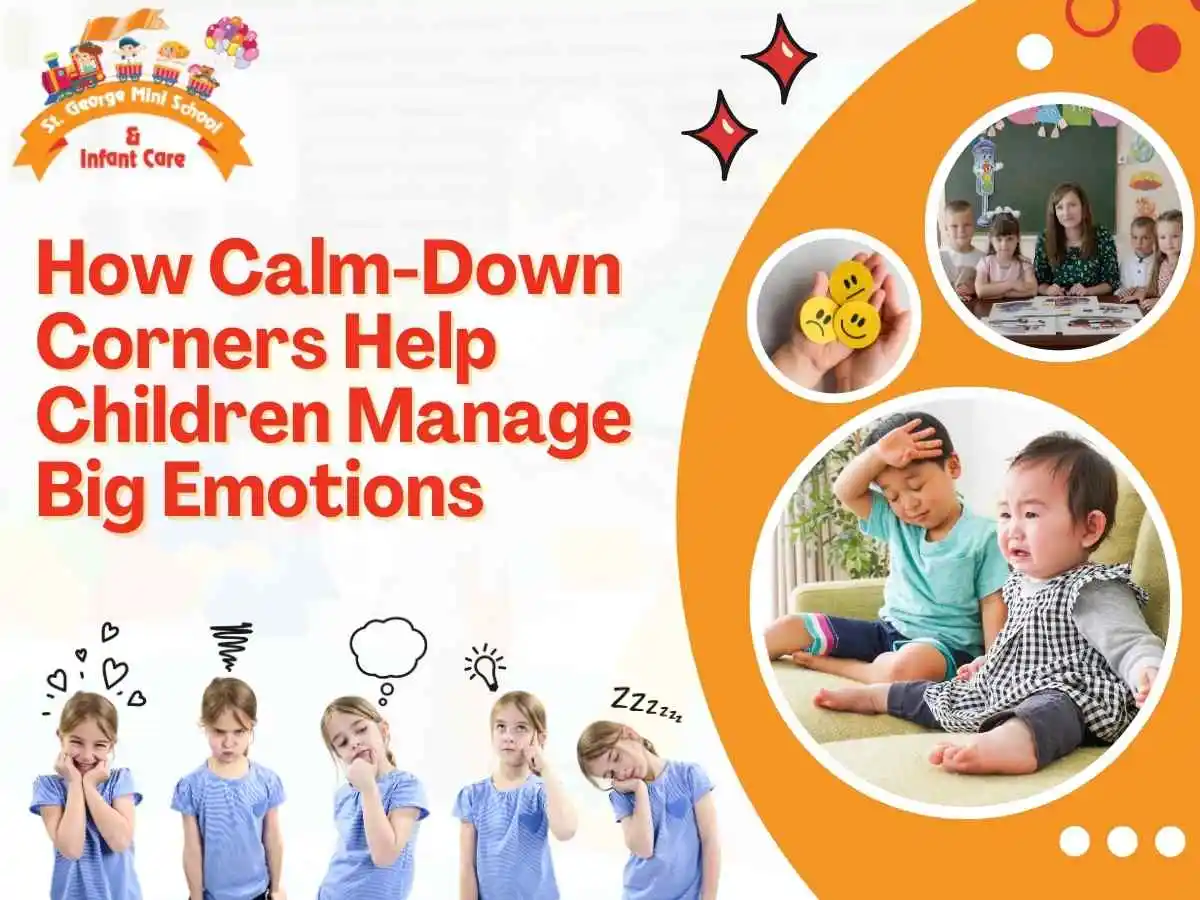
Big feelings are an ordinary occurrence during childhood. Young children
are still learning how to understand and manage their emotions, which means
they can easily feel overwhelmed by frustration, excitement, anger, sadness, or
overstimulation. Calm-down corners are becoming a common and supportive
approach used by educators in daycare and child care settings to help children
develop emotional awareness and self-regulation.
Instead of viewing emotional outbursts as misbehaviour, many modern
child care centers see them as opportunities for learning and emotional growth.
Calm-down corners are not intended to be punitive; instead, they are safe and
comfortable spaces where children can take a break, reset, and regain control.
What Is a Calm-Down Corner?
A calm-down corner is a thoughtfully designed, quiet space in a
classroom where children can go when they feel overwhelmed or overstimulated.
It may include soft seating, sensory materials, soothing objects, or emotion
charts that help children identify and express what they are feeling.
Many progressive day care schools design these spaces to help children
practice emotional regulation. These spaces help children understand that
feelings are normal and can be managed in healthy ways.
In contrast to traditional time-outs, calm-down areas focus on guidance
rather than punishment. The goal is not isolation, but giving children time to
reflect and calm themselves.
Why Emotional Regulation Starts
Early
Children are not born knowing how to handle frustration or
disappointment. Emotional self-regulation is a learned skill that develops over
time through modelling, repetition, and support.
In a quality child care setting, caregivers help children:
• Recognize and name their
feelings
• Practice calming strategies
such as deep breathing
• Learn problem-solving after
conflicts
• Return to activities once they
feel ready
These small but consistent lessons help children build resilience and
confidence. Over time, children begin to independently choose calming
strategies instead of reacting impulsively.
How Calm-Down Corners Support
Social-Emotional Learning
Social-emotional learning is now considered a core component of early
childhood education. Many modern daycare programs incorporate structured
emotional learning into daily routines.
Calm-down corners support this development by:
• Teaching children that emotions
are manageable
• Encouraging self-awareness
• Reducing classroom disruptions
• Promoting empathy among peers
When children observe others using calming strategies, they learn by
example. This creates a classroom culture where emotional expression feels safe
and supported.
Building Confidence Instead of
Shame
One of the biggest benefits of calm-down corners is that they help
reduce feelings of shame. When children are gently guided to a calming space,
they learn that strong emotions are not bad. Instead, they learn that emotions
are signals that deserve attention and understanding.
Positive guidance in supportive day care settings helps children
understand what happened and what they can do differently next time. This
creates long-term emotional intelligence as opposed to punishment.
What Parents Can Do at Home
The idea of a calm-down corner is not exclusive to day care centers. You
can create a small space in your home where your child can go when they feel
upset. You can include comfort items in that space.
Children learn these skills best when there is consistency between home
and day care.
The best thing for children is when both parents and day care teachers
are consistent in their approach. When both environments follow similar
approaches, children learn that big feelings are normal and that they can
handle them in healthy ways.
The Long-Term Impact
Children who learn emotional regulation early are more likely to succeed
socially and academically as they grow. They are also more likely to
communicate effectively, resolve conflicts peacefully, and adapt well to
structured learning environments.
Experienced day care centers understand that learning to manage emotions
is just as important as learning letters and numbers. All other development is
based on emotional skills.
Summary
Calm-down corners offer children a secure and supportive way to cope with strong emotions while learning important self-control skills. Through a non-punitive approach to child care, quality daycare and child care programs help children develop emotional awareness, resilience, and confidence at an early stage. These approaches are especially valuable for families looking for an emotionally supportive Day Care Center North York that prioritizes healthy early learning and child development.
Featured Blogs
 28/03/22
Which Is The Best Age To Start Chil...
Daycare North York Infant Daycare North York Day Care Center North York Subsidized Daycare North York Daycare Toddlers North York Preschool Programs North York Child Care North York Before and After School Care North York Day Care North York Preschool North York Subsidized Child Care North York Day Care Schools North York





33 Mallard Rd. Centre
- Contact: Sarah Ashfield
- Tel: (647) 478-6114
- E-mail: [email protected]
- 33 Mallard Rd., North York, Ontario M3B 1S4
25 Mallard Rd. Centre
- Contact: Rasha Shamas, RECE
- Tel: (647) 812-7795
- E-mail: [email protected]
- 25 Mallard Rd., North York, Ontario M3B 1S4
141 Bond Ave. Centre
- Contact: Jenna Wright, RECE
- Tel: (647) 478-6043
- E-mail: [email protected]
- 141 Bond Ave., North York, Ontario M3B 1M1
All Rights Reserved © 2026-2027. St. George Mini School & Infant Care.